
Face

Ear Surgery

Otoplasty, or ear pinning surgery, is a procedure designed to reposition protruding or uneven ears. This surgical intervention can significantly change your appearance and improve self-confidence.

Why Consider Otoplasty?

Otoplasty is suitable for both children and adults. While it's often performed in children to address prominent ears during their developmental years, otoplasty can also be effective in teenagers and adults. In Australia, Medicare will only support this operation for patients up to  age 18.

The Otoplasty Procedure

The procedure typically involves:

  • Making incisions behind the ears
  • Exposing and reshaping the cartilage
  • Suturing the incisions - most sutures are dissolving, but there may be two on each side that require removal about a week after surgery.

Otoplasty is usually performed on a day surgery basis, allowing most patients to return home shortly after the procedure. In younger patients, an overnight stay is an option.

Sometimes we have a request to perform this surgery prior to a child starting school. On one level this is understandable from a parental viewpoint, but for a child of pre-school age this can be very traumatic and we would usually advise deferring surgery until age 8 or 9 at least. This is not an absolute rule but the operation is uncomfortable and the post-operative bandage (see below) is quite an imposition. Both of which require a good understanding and significant cooperation- that may be a lot to ask from a 5 or 6 year old patient.

Recovery and Results

After surgery, a bulky bandage will be applied to assist with moulding and healing. The bandage will remain in place for up to 10 days, then at night for another week. There is a dressing change at around day 3 or 4. This performed at an office visit.

Most adults can return to work within five days, while children can usually go back to school at about day 10 post surgery. It's important to avoid strenuous activities for 3 weeks and  contact sports for 3 months.

Discover Experience
and Compassionate Care

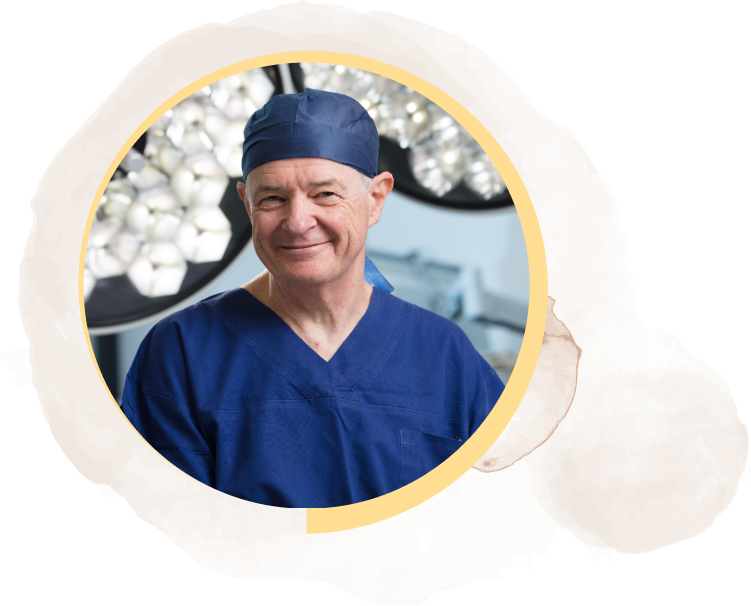
Dr Knox is your trusted specialist for Facial Surgery.

Eyelid Reduction

Eyelid reduction, or blepharoplasty, is a surgical procedure designed to address aesthetic and functional issues related to drooping eyelids. By removing excess skin and fat, eyelid reduction can create a more youthful and refreshed appearance. In some cases where upper lid skin is very heavy, patients report an improvement in how much they can see once the excess skin is removed.

Why Consider Eyelid Reduction?

Sagging eyelids can:

  • Obstruct your vision
  • Make you appear tired or aged
  • Affect your self-confidence
  • Cause itch and skin irritation particularly in warmer weather or after exercise.

Eyelid reduction can help to:

  • Improve your appearance
  • Improve your vision if the excess skin is reducing your field of view

The Eyelid Reduction Procedure

Dr Knox will carefully assess your individual needs and recommend the most appropriate technique. Eyelid reduction can be performed on the upper eyelids, lower eyelids, or both. Incisions are typically made in the natural folds of the skin to minimise scarring.

LOWER lid surgery is effective in reducing bulging due to fat pads, and in some instances it helps with excess skin. But skin tightening/texture improvement may be better addressed with laser or thermal therapies. That assessment is best made during an in-person consultation.

Recovery and Results

There are a number of simple but important steps and precautions to take both before and in the immediate few days after this surgery. Dr Knox will cover this with you during your consultation along with some written instructions.

Your past history is also very important in the decision as to whether or not to proceed.

Previous surgery or trauma, previous or current eye disease, dry eye syndrome, glaucoma, poorly controlled blood pressure or anticoagulant medications are among the important issues to be assessed and discussed before proceeding with this operation.

Expect bruising and swelling which is usually at its most prominent on the second post op day.

Some patients just have mild swelling, but the majority will have bruising to some extent for at least a week. You need to avoid strenuous activities, smoking, and excessive alcohol consumption for at least 2 weeks after surgery. Sutures are removed at 1 week post surgery. We prefer not to use dissolving sutures as they can generate irritation and itch.

To learn more about eyelid reduction and determine if it's right for you, schedule a consultation with Dr Knox.
dr-knox-internal-cta-image-3

Bespoke Care Can Start With A Call

Contact us on 9553 9188 to book a consultation

Facelift

A facelift is a surgical procedure designed to help with issues like sagging skin, especially along the jawline, and the adjust facial contours. As we age, our facial skin loses elasticity, leading to wrinkles, jowls, and a less defined jawline. Surgery can’t bring back a youthful skin, but this surgery can lift up drooping tissues and remove excess skin that has resulted from stretching over a lifetime. The goal is to help to improve these signs of aging and create a more refreshed look.

why consider a facelift

Why Consider a Facelift?

A facelift can:

  • Reduce the appearance of heavy wrinkles
  • Tighten sagging skin in the face and neck
  • Restore a more youthful facial contour

The Facelift Procedure

There isn’t just one technique with this area of surgery, and your consultation will help Dr Knox and his team to define your specific requirements and tailor a plan accordingly. While it is possible to combine this and other operations such as eyelid reduction, our general approach is to focus on one procedure and perform it with precision and care, rather than push through several alternatives at once. A facelift typically involves creating incisions near the hairline and around the ears, lifting and tightening sagging facial skin, removing some excess fat, and reinforcing underlying facial muscles.

This surgery gives the best results where the is excess but soft skin that isn’t too sun-damaged and without excess underlying fat. However, we can usually offer worthwhile changes which is also the role of your pre-operative consultation.

Recovery and Results

Facelift surgery requires downtime for healing. You can expect:

  • Swelling and (usually) bruising. Even if you don’t bruise at all, your face will be swollen and you will look different to those who know you. If you are hoping to ‘stay under the social radar’, then you should allow at least 3 weeks for bruising and swelling to resolve.
  • For the first week you will be wearing a special garment day and night to provide support, optimise healing and reduce swelling (removed for showering , hair and wound care etc). By the second week we usually advise wearing at nighttime only depending on your progress.
  • Expect altered feeling in the skin at the sides of your cheeks: this will come back to normal but may take some months.

Most patients return to work within four weeks, but full recovery may take several months.

In a sense, this operation ‘resets the clock’, but the aging process will continue including in your face. The speed at which that happens varies from person to person.

Discover Experience
and Compassionate Care

Dr Knox is your trusted specialist for Facial Surgery.

Neck lift

 A neck lift is a surgical procedure designed to provide some tightening of loose or sagging skin in the neck. It commonly involves removing some fat but, as with other contouring operations, it isn’t an effective treatment for a bulky neck. Muscles below the chin are frequently tightened as part of the procedure.

Why Consider a Neck Lift?

A neck lift can:

  • Tighten loose skin
  • Minimise a double chin
  • Provide more definition of the jawline
  • Improve the appearance of "turkey neck"
  • Reduce the visibility of prominent neck muscles
why consider a neck lift

The Neck Lift Procedure

As part of your consultation Dr Knox will discuss your concerns and goals and show you a plan to achieve your goals.. The procedure typically involves:

  • Making incisions in front and behind the ears or under the chin, rather like a facelift.
  • Tightening the muscles under your chin
  • Removing excess skin and fat

A neck lift can often be combined with other facial surgeries, such as a facelift or eyelid surgery.

Recovery and Results

Neck lift surgery typically requires a short hospital stay and involves one to two weeks of recovery time.

For the first week you will be wearing a special garment day and night to provide support, optimise healing and reduce swelling (removed for showering , hair and wound care etc). By the second week we usually advise wearing at nighttime only depending on your progress.

You may experience swelling, bruising, discomfort, and limited movement of your neck following the procedure.

Most patients can usually return to normal activities within 3 to 4 weeks, vigorous sport or gym activities including some styles of yoga may take longer.

Consultation with Dr Knox

To learn more about neck lift surgery and determine if it's right for you, schedule a consultation with Dr Knox. He will discuss your goals, expectations, and the potential risks and benefits of the procedure.

Dr Adrian Knox logo in white

St George Private Hospital

  • Suite 6, Level 3, 1 South St
    Kogarah NSW 2217

Gregory Hills Health & Business Centre

  • Suite 17, Level 2, 13 Digiteria D Gledswood Hills NSW 2557

Copyright 2024 Dr Adrian Knox